
How Durable Granite Countertops React to Daily Heat and Hidden Surface Pressure?
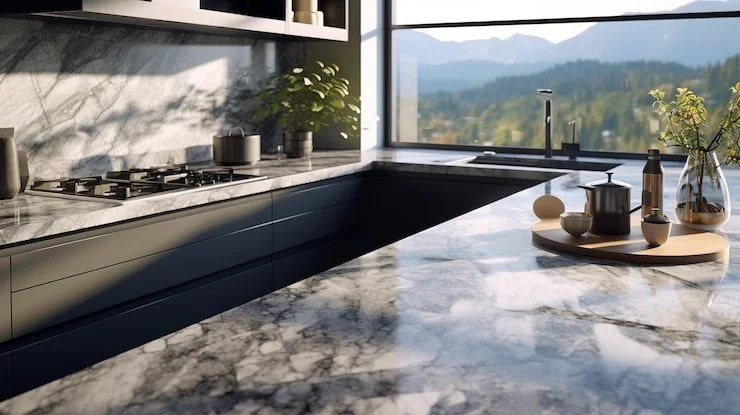
Summary: This blog explains how durable granite countertops react to daily heat and hidden surface pressure in real kitchens. It shows how heat, weight, and uneven cabinet support affect performance over time. It also highlights why proper leveling, installation quality, and structural support matter more than the stone itself for long-term stability and smooth daily use.
You see a kitchen counter as one flat stone sitting on cabinets. But that picture is too simple. Real life adds heat, weight, small gaps, and uneven support under the surface. That’s where problems or perfect performance start. The durable granite countertops surface reacts quietly, but every reaction depends on how it was measured, cut, and supported from the start. Most people only notice the top layer. The real story sits underneath.
Why Granite Responds Differently From Other Kitchen Surfaces?
Granite is not soft. It does not bend or adjust to uneven support. It behaves like a solid block that follows physics, not comfort. So when heat or pressure hits it daily, it does not warp easily; it spreads the load across its structure, and it reveals weak support below instead of hiding it. This makes granite reliable, but also strict. It demands correct installation conditions before it performs well.
How Does Daily Heat Actually Interact With Granite Surfaces?
Kitchen heat comes from different sources:
• Hot pans placed directly on the surface
• Steam coming from cooking areas
• Sunlight falling near windows
Granite handles heat better than many other materials because it forms under very high heat deep inside the earth. But daily use still creates small stress changes:
• Quick temperature changes can cause tiny tension inside the stone
• Uneven heat can make parts of the surface expand differently
• Long contact with very high heat can affect the seal layer, not the stone
So the stone stays strong, but the outer protection layer takes most of the impact.
What Hidden Surface Pressure Really Means in Real Homes?
Surface pressure is not just about weight. It means uneven load spread across cabinets and support points. This happens when one cabinet sits a little lower than the others, support frames do not line up properly, and shims are missing or placed incorrectly. The result is simple but important: one part of the slab carries more weight, another part gets less support, and pressure builds in small areas instead of spreading evenly. Over time, this can cause small shift lines or edge stress points in the stone.
Why Cabinet Leveling Decides Everything Before Stone Placement?
Granite does not fix cabinet errors. It exposes them. Before installation, professionals check:
Front-to-back level alignment
Side-to-side height balance
Wall straightness consistency
Small differences matter. Even a few millimeters can change how the slab sits. Correct installation uses:
Shims to balance low points
Grinding or adjustment on high points
Continuous leveling checks before final placement
This step decides whether the countertop feels stable or slightly off forever.
What Happens When Heat And Pressure Combine Over Time?
Heat and pressure do not act alone. They combine slowly. Here’s what that looks like in real use:
Heat expands the surface slightly during cooking
Pressure holds some areas tighter than others
Cooling resets the stone shape daily
If the base is uneven, this cycle repeats stress in the same weak zones. That’s where you see minor edge lifting over time, hairline stress marks near corners, and slight misalignment in joints. Not sudden damage, but slow structural fatigue.
Why Installation Quality Matters More Than Stone Quality?
Even premium stone fails if installed poorly. Good installation focuses on full base support under the slab, balanced weight distribution, and correct adhesive and leveling techniques. Poor installation skips alignment correction and relies on stone strength alone. Stone strength cannot be fixed: cabinet gaps, uneven framing, and weak support points. So performance depends more on structure than material grade.
How Design Choices Reduce Surface Stress Without Changing Strength?
Design also affects pressure behavior. Simple choices improve performance:
Thicker edges distribute weight better
Rounded edges reduce stress concentration points
Proper overhang limits unsupported zones
Even layout decisions matter:
Sink placement near strong support zones
Avoiding large unsupported spans
Keeping heavy-use zones centered over cabinets
These small choices reduce long-term pressure buildup.
Why Digital Planning Tools Help Before Installation Begins?
Modern planning tools reduce guesswork. A tool like MSI Countertop Visualizer helps align expectations before cutting begins. It helps by:
Showing layout fits inside real kitchen dimensions
Helping identify spacing conflicts early
Reducing design misalignment before fabrication
But it does not replace physical leveling. It only improves planning accuracy.
Real-World Example: Why A 3 mm Gap Changes Everything?
A small height gap looks harmless on paper. But once installed:
One edge presses harder into the support
Opposite edge lifts slightly
Stress spreads unevenly across the slab
This leads to long-term movement issues if ignored. Fixing it early is always easier than correcting it after installation.
Why Granite Still Performs Best In High-Use Kitchens?
Even with all these conditions, granite remains one of the most stable materials for kitchens. It performs well because it resists heat naturally, it handles daily weight without flexing, and it maintains surface integrity over long periods. Its only requirement is proper installation support.
Bottom Line
A countertop is not just a stone surface. It is a system where cabinets, support, heat, and pressure all interact. The durable granite countertops installation performs best when the base is corrected before placement, not after problems appear. When alignment, leveling, and support work together, granite stays stable, clean, and predictable in daily use.
Prairie Stone focuses on precision stone fabrication and installation for homes. The work includes granite, quartz, marble, and quartzite surfaces shaped for real residential layouts. Every slab gets measured, cut, and installed based on actual site conditions, not assumptions. That approach helps reduce surface stress, improve alignment, and deliver long-term stability in kitchens and bathrooms.
Frequently Asked Questions
(1) Do granite countertops get damaged from daily kitchen heat?
No, granite handles heat well. But sudden hot and cold changes can affect the seal over time.
(2) What causes hidden pressure under granite countertops?
Uneven cabinets, poor leveling, or missing support points create hidden stress under the stone.
(3) Can small cabinet gaps really affect granite installation?
Yes, even small gaps change weight balance and can cause long-term fitting issues.
(4) Why does granite show problems if cabinets are uneven?
Granite does not bend, so it shows any base problems instead of hiding them.
(5) How can installers reduce stress on granite countertops?
They level cabinets properly, add support, and use shims before placing the stone slab.