
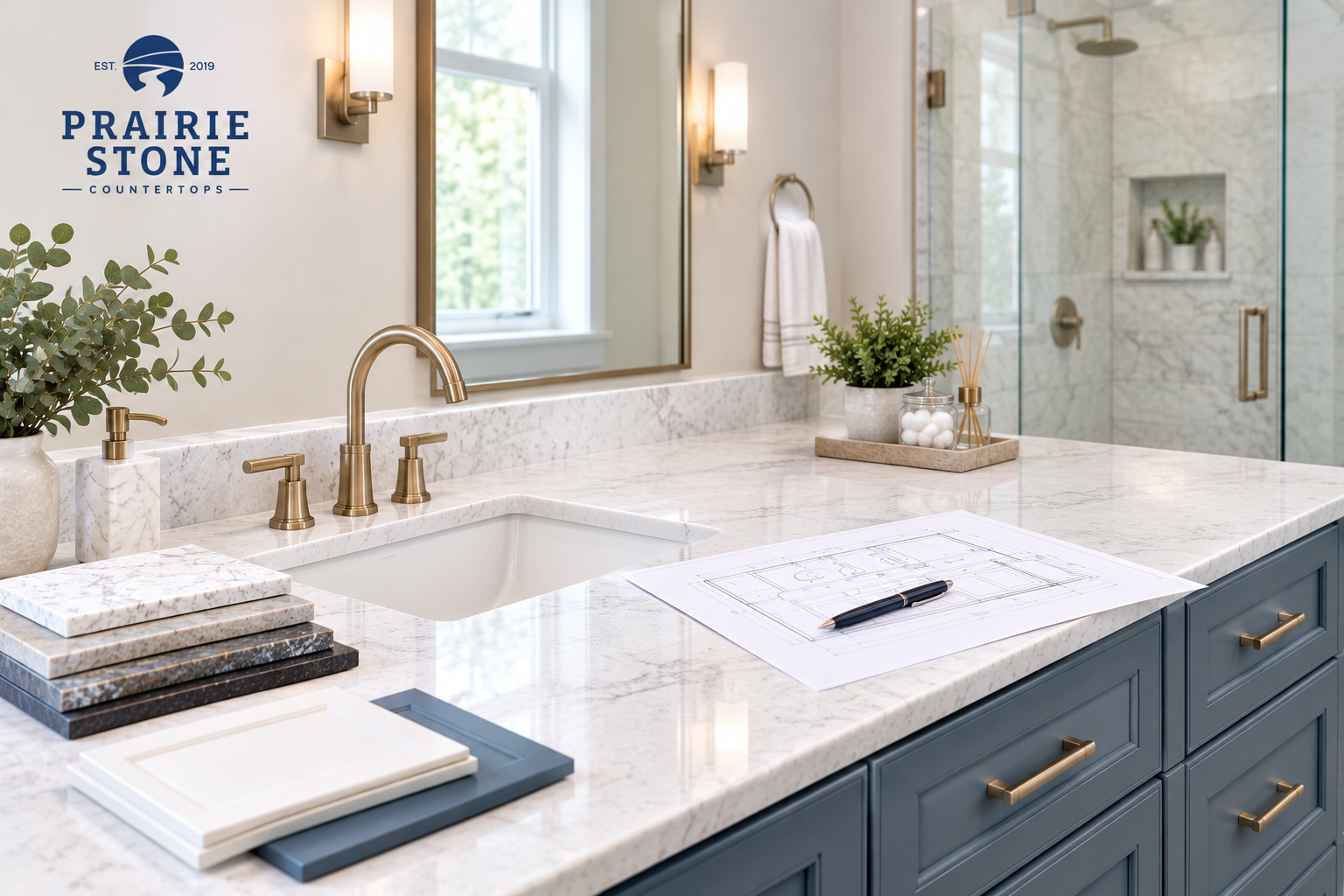
A vanity top needs to fit more than a cabinet. It must also work with the sink, faucet, walls, and overall bathroom design. That is why custom bathroom vanity tops Rapid City can make sense when a standard top does not fit your space. Careful planning can help you avoid gaps, poor placement, and design problems later.
Why Do Cabinets Matter When Choosing a Vanity Top?
The vanity cabinet gives you the starting point for the entire top.
Its width and depth help determine the size of the surface you need. The cabinet's position matters too. A vanity pushed against two walls may need different measurements than one with open space on both sides.
Standard vanity tops can work well when the cabinet follows common sizes. But bathrooms do not always have standard layouts. An older home may have a smaller vanity. A custom cabinet may have a different depth. Even a small change can affect how the top fits.
Before choosing the surface, check:
Cabinet width and depth
Wall placement
Available counter space
Sink location
Faucet placement
Desired overhang
This simple check can prevent a common mistake: buying a top first and trying to make everything else fit around it.
How Should the Sink Affect the Vanity Top Design?
The sink should become part of the plan from the start.
An undermount sink needs a cutout in the vanity top. A vessel sink sits above the surface and creates a different look. A double-sink setup also needs enough room for both bowls, faucets, and the space between them.
The faucet matters too. Its location must work with the sink and the wall behind the vanity.
For homeowners comparing options for a bathroom sink countertop North Dakota project, these details can make a big difference. The sink, top, and faucet should work as one setup rather than three separate choices.
So, choose the sink and faucet plan before fabrication begins. This gives the fabricator the information needed to create the right openings.
It also helps you think about daily use. You may want more open counter space near the sink for soap, towels, or other bathroom items.
Material Choice Shapes the Look and Feel of the Bathroom
Once the layout makes sense, it is time to think about the surface itself.
Granite, quartz, marble, and quartzite can all work for bathroom vanity tops. Each material brings a different look to the room.
Quartz can offer a clean and consistent appearance. Granite can bring natural color and pattern. Marble often gives a bathroom a classic feel, while quartzite can create a bold natural-stone look.
Do not choose only from a small color sample if you can view the actual slab. Natural stone can have changes in color, pattern, and veining.
Also, look at the cabinet and wall colors at the same time. A surface that looks great by itself may not work as well with the rest of the room.
Think about care, too. Ask about cleaning needs and how the material may fit your daily routine before making a final choice.
What Happens When Bathroom Walls Are Not Perfectly Straight?
Walls can create a headache when the space is not perfectly square.
This can happen in older homes or rooms where the walls have shifted slightly over time. You may not notice the difference at first. But once a straight vanity top meets an uneven wall, even a small gap can stand out.
That is one reason accurate measuring matters so much.
Digital templating can capture the shape and measurements of the countertop area before fabrication. This gives the fabricator better information about the actual space instead of relying only on basic measurements.
The goal is simple: measure the area, plan the cuts, and fabricate the top around the space.
That does not mean every wall problem disappears. It means the fabricator can account for the shape of the room before cutting the material.
The Measurement Stage Sets Up a Better-Fitting Vanity Top
Good fabrication starts with good measurements.
Before the top gets made, several details need attention. These include the cabinet size, wall position, sink opening, faucet holes, edge details, and slab layout.
The slab layout also deserves some thought. Natural stone may have strong veins or patterns. Where the fabricator places the cuts can change how those patterns appear on the finished vanity.
If you already have cabinet, paint, or tile samples, bring them when looking at slabs. Seeing the pieces together can make the decision much easier.
This is also a good time to discuss installation. Most straightforward countertop installations can take about a day, but the actual schedule can change based on the material, project size, and site conditions.
Can a Small Bathroom Benefit From a Custom Vanity Top?
Yes, and a small bathroom can sometimes benefit even more from careful planning.
A powder room or small guest bathroom may have very little extra space. The vanity may sit between two walls or near a doorway. A standard top may leave an awkward gap or simply not fit.
A custom top lets you plan around the space instead of forcing the space to match a standard size.
There is another option worth asking about: remnants.
A smaller bathroom vanity may not need an entire slab. A suitable remnant can work well when the size and material match the project.
This can give homeowners another choice for smaller vanities. It is worth checking available remnants before deciding that a full slab is necessary.
Cabinets, Sinks, and Walls Should Work Together
A bathroom can have beautiful individual pieces and still look disconnected.
The vanity top should work with the cabinet color. The sink should fit the top and the available counter space. The wall surface should support the overall design rather than compete with it.
Think about the room as a group of connected parts.
For example, a simple cabinet may look great with a stone top that has strong natural movement. A bold cabinet may pair better with a calmer surface. The right choice depends on the look you want.
Large-format panoramic tile can also create a more continuous wall surface. Some sheets can measure up to 10 feet by 5 feet, which can mean fewer seams across a large area.
However, a vanity top project does not always include every part of a bathroom renovation. Cabinet work, plumbing, electrical work, and other trades may require separate professionals.
Keeping those roles clear can make the project easier to plan.
Careful Planning Helps Avoid Costly Vanity Top Mistakes
A custom vanity top does not need to be complicated. Most problems start when key details get decided too late.
Choose the cabinet setup first. Then settle on the sink and faucet. After that, select the surface and work through the measurements and design details.
It also helps to ask questions before fabrication starts.
Confirm the final dimensions. Check the sink cutout. Review the faucet placement. Discuss the edge style. Look at the slab layout. If the material has strong veining, ask how the pattern will appear after cutting.
These small steps can save time and reduce surprises.
Most importantly, do not treat the vanity top as an isolated purchase. It sits at the meeting point of the cabinet, sink, walls, and other bathroom surfaces. When those pieces work together, the finished space feels much more natural.
Bottom Line
A custom vanity top should solve a real need. Maybe the cabinet has an unusual size. Perhaps the walls are not perfectly straight. You may want a certain sink setup or a specific stone pattern. Whatever the reason, planning the top around the actual space can make the project easier.
Prairie Stone offers custom countertop fabrication and installation with granite, quartz, marble, and quartzite surfaces. Our digital templating process helps turn real measurements into a carefully planned countertop. For homeowners considering custom bathroom vanity tops Rapid City, we can help create a vanity surface that fits the details of the space.
Frequently Asked Questions
1. Can A Custom Vanity Top Fit An Uneven Bathroom Wall?
Yes. Accurate templating can account for uneven walls, helping the finished vanity top fit the actual bathroom space more closely.
2. Which Materials Work Well For Custom Bathroom Vanity Tops?
Granite, quartz, marble, and quartzite are popular options, offering different colors, patterns, maintenance needs, and design styles for bathrooms.
3. Should I Choose The Sink Before Ordering A Vanity Top?
Yes. Selecting the sink first helps determine the required cutout, faucet placement, available counter space, and overall vanity configuration.
4. Can Remnant Stone Work For A Small Bathroom Vanity?
Yes. Suitable remnants can provide enough material for smaller vanities while giving homeowners access to attractive stone options for compact spaces.
5. How Are Custom Vanity Tops Measured Before Fabrication?
Measurements and digital templating capture the cabinet, walls, sink openings, and other details needed to plan accurate countertop fabrication.